
 Re-mark
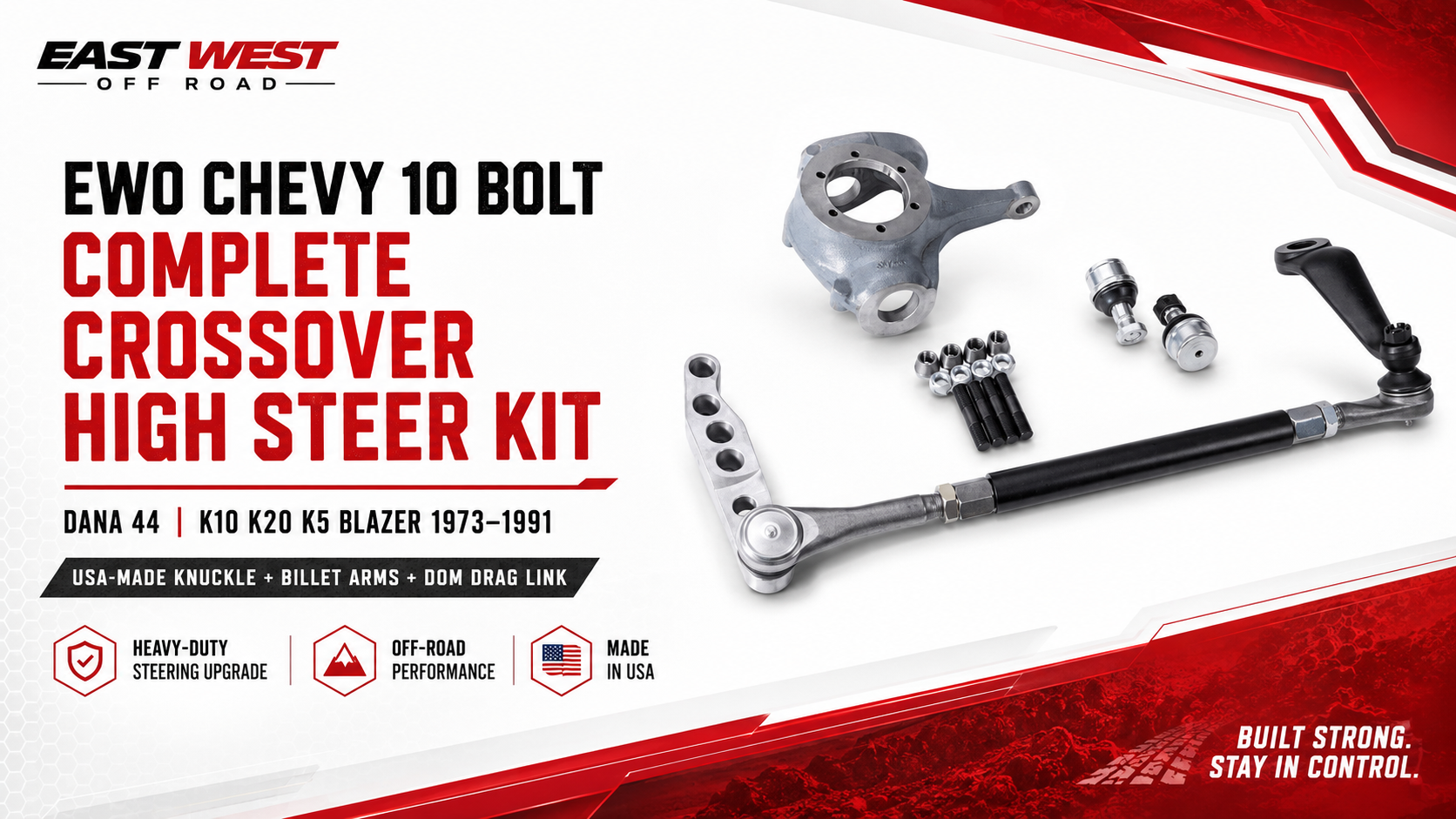
GM Dana 44 Crossover Steering Kit for K5, K10, K20 and Suburban Builds A GM Dana 44 crossover steering kit can be an important part of a lifted K5 Blazer, K10, K20, or Suburban build when the original steering path no longer works well with the suspension and intended terrain. These vehicles share many design concepts, but they should not be treated as identical. A short-wheelbase K5 rock crawler, long-wheelbase Suburban overlander, restored K10, and heavily modified K20 can place different demands on steering response, clearance, tire leverage, road stability, and serviceability. The correct conversion begins by matching the steering system to the actual vehicle—not copying another truck’s measurements. Start With the Build’s Real Purpose Before evaluating parts, define what the vehicle needs to do. K5 Blazer rock crawler A K5 built for technical terrain may prioritize: Steering-component clearance Suspension articulation Slow-speed control Tire clearance Resistance to rock impact Easy trail inspection K10 street-and-trail truck A mixed-use K10 may need: Stable highway tracking Predictable return-to-center Moderate trail durability Correct steering-wheel center Controlled tire wear Serviceable components K20 heavy trail build A modified K20 may run: Larger tires Heavier wheels Increased vehicle load More demanding terrain Greater steering leverage Custom axle or suspension parts Suburban overlander A Suburban may prioritize: Long-distance stability Predictable road manners Load-carrying consistency Remote-service planning Tire-wear control Reliable alignment The steering geometry must support both the vehicle and its intended use. Confirm the Axle in Every Build Do not assume the axle from the vehicle name. A K5, K10, K20, or Suburban may now have: Original Dana 44 Later GM Corporate 10 Bolt Donor axle Mixed knuckles and hubs Aftermarket steering parts Modified brake components Custom spring placement Inspect differential-cover shape, casting marks, ball-joint configuration, knuckle design, spindle parts, and axle width. The EWO system is intended for selected Dana 44 and Chevy/GM Corporate 10 Bolt applications. K5 Blazer Steering Considerations A lifted K5 often sees more articulation than it did in factory form. Potential steering concerns include: Steep drag-link angle Low linkage clearance Contact during compression Poor caster after lift Short-wheelbase sensitivity Steering-wheel kick on uneven terrain Larger-tire leverage A crossover high-steer layout may provide a more suitable drag-link path and elevated passenger-side connection. Because K5 builds vary greatly, cycle the suspension before finalizing link length. Pay particular attention to: Differential-cover clearance Spring contact Driver-side frame and pitman-arm clearance Wheel backspacing Tire contact at full lock K10 Steering Considerations A K10 may remain close to stock or may be transformed into a large-tire trail truck. On a street-driven K10, do not sacrifice road manners for visual ride height. Verify: Caster Toe Steering-box condition Frame integrity Tire pressure Drag-link angle Return-to-center Equal left and right travel A crossover conversion may help when factory geometry conflicts with the lift, but worn steering parts should be corrected first. K20 Steering Considerations A K20 may be used for heavier work, larger tires, or demanding off-road conditions. Inspect the truck for: Previous axle replacements Steering-box frame cracks Bent factory linkage Worn spring bushings Excessive wheel offset Ball-joint and bearing wear Tie-rod clearance Brake and hub compatibility The EWO kit includes a 1.25-inch billet passenger-side arm and heavy-duty D.O.M. drag-link material, but the strength of the completed system also depends on fabrication quality and correct geometry. Suburban Steering Considerations A Suburban’s wheelbase and vehicle mass can make highway stability particularly important. A conversion should maintain: Straight-line tracking Proper caster Correct toe Predictable return-to-center Equal steering travel Tire clearance under load Suspension clearance during articulation Long-distance travel also increases the importance of inspection and serviceability. Document the ES-series steering-end part numbers, jam-nut sizes, ball-joint specifications, and steering-box information for future maintenance. What Changes With the EWO System? The EWO kit includes: USA-made steering knuckle Bottom-up taper Slit tapered insert for alternative orientation 1.25-inch billet passenger-side arm 43-inch heavy-duty D.O.M. drag-link tube ES2026R and ES2027L drag-link ends Metal-on-metal upper and lower ball joints Dana 9/16-inch studs Conical washers Lock nuts Left and right 7/8-18 weld bungs Left and right jam nuts Fully indexable 3-inch drop-forged pitman arm 32-spline pitman-arm configuration The new system routes the drag link laterally to the passenger-side arm and raises the connection above the knuckle. GM Dana 44 Crossover Steering Kit Vehicle Comparison Vehicle Typical build priority Key steering checks K5 Blazer Articulation and clearance Drag-link bind, tire contact, caster K10 Street and trail balance Tracking, toe, return-to-center K20 Heavy-duty use and large tires Frame, bearings, leverage, linkage Suburban Highway stability and load Caster, tire wear, steering center GMC Jimmy Similar to K5 applications Actual axle and suspension configuration GMC K-series Mixed work and trail use Axle identity, box mount, geometry These are planning categories, not guaranteed fitment statements. The Required 2WD Steering-Box Conversion A compatible 2WD Saginaw-style steering box is required. The factory 4WD box cannot operate a conventional lateral crossover drag link correctly. Before conversion, check: Box mounting pattern Sector-shaft spline Pitman-arm fit Hydraulic hose compatibility Steering-shaft connection Frame condition Header clearance Equal travel Box center The supplied pitman arm is fully indexable and provides a 3-inch drop. Do not use indexability to compensate for an incorrectly centered steering box. Drag-Link Fabrication for Different Vehicles The supplied D.O.M. tube is 43 inches long with a 1.50-inch outside diameter and 0.250-inch wall. The final length may differ according to: Axle width Steering-box position Frame design Pitman-arm position Steering-arm location Thread engagement Adjustment range Vehicle modifications Never copy a drag-link length from another K5, K10, K20, or Suburban without measuring the actual build. The left- and right-hand weld bungs should be installed so the completed link can be adjusted by rotating the tube. Professional welding is recommended. Taper Direction and Clearance The supplied knuckle uses a bottom-up taper. The slit insert permits an alternative bottom-down arrangement where appropriate. Choose based on: Joint seating Arm height Wheel clearance Tire clearance Spring position Drag-link angle Full suspension travel Steering-end articulation On some builds, a change in taper direction may improve one area while reducing clearance somewhere else. Test the complete system. Correcting Steering Problems Without Overpromising A properly planned crossover conversion may help with: Geometry-related bump steer Poor factory drag-link positioning Low component clearance Inadequate articulation clearance Weak or damaged original linkage It does not automatically fix: Incorrect caster Worn steering box Cracked frame Loose bearings Tire defects Worn spring bushings Bent axle housing Improper toe Wheel imbalance Diagnose the front end before installation. Installation Workflow for a K-Series Build Identify the axle. Inspect frame and steering-box mount. Measure caster and toe. Confirm wheel and tire clearance. Select compatible 2WD box. Center the steering box. Install ball joints and EWO knuckle. Mount the billet arm. Select taper direction. Mock up pitman arm. Measure and fabricate drag link. Cycle suspension and steering. Set alignment. Complete low-speed road test. Reinspect hardware. Trail and Road Inspection Schedule Inspect the system: After initial installation After the first low-speed drive After professional alignment After the first trail outing After a hard steering impact At routine service intervals Before long overland trips Check: Steering-arm mounting hardware Tapered joints Jam nuts Welds Ball-joint play Steering-box mount Frame condition Pitman-arm connection Drag-link clearance Choosing the Kit for Your Build The EWO Chevy and GM crossover steering system may be a suitable starting point when: The front axle is compatible. A 2WD steering-box conversion is planned. High-steer clearance is needed. Fabrication resources are available. The suspension can be cycled. Professional alignment will be completed. Existing wear will be repaired. Contact the manufacturer with axle, vehicle, steering-box, lift, and knuckle details when fitment remains uncertain. Conclusion A GM Dana 44 crossover steering kit should be configured differently for a K5 Blazer rock crawler, K10 street-and-trail truck, K20 heavy-duty build, or Suburban overlander. The vehicles may share axle and chassis concepts, but their wheelbase, load, tires, suspension, and intended use affect steering requirements. The EWO kit provides a USA-made knuckle, billet arm, D.O.M. drag-link material, ball joints, ends, forged pitman arm, and hardware for selected Dana 44 and Chevy 10 Bolt builds. Verify the axle, install a compatible 2WD steering box, measure the actual drag-link length, cycle the suspension, and complete professional alignment before use. FAQs Is the same drag-link length used on K5, K10, K20, and Suburban builds? Not necessarily. Axle width, steering-box position, suspension, frame configuration, arm placement, and prior modifications can change the required length. Measure each vehicle individually. Which vehicle benefits most from high steer? There is no single answer. Rock crawlers may benefit from clearance, while lifted street trucks may benefit from improved geometry. Suitability depends on the actual suspension and steering arrangement. Does the K20 badge confirm a Dana 44 axle? No. The truck may have been built or later modified with a different front axle. Inspect and identify the housing and knuckles before ordering. Is this kit appropriate for an overlanding Suburban? It may be suitable for a compatible axle and correctly designed build. Long-distance road use makes professional fabrication, alignment, steering return, tire wear, and ongoing inspection especially important. Can the factory 4WD steering box remain in place? Not for this conventional crossover arrangement. A compatible 2WD Saginaw-style steering box is required.
You may like
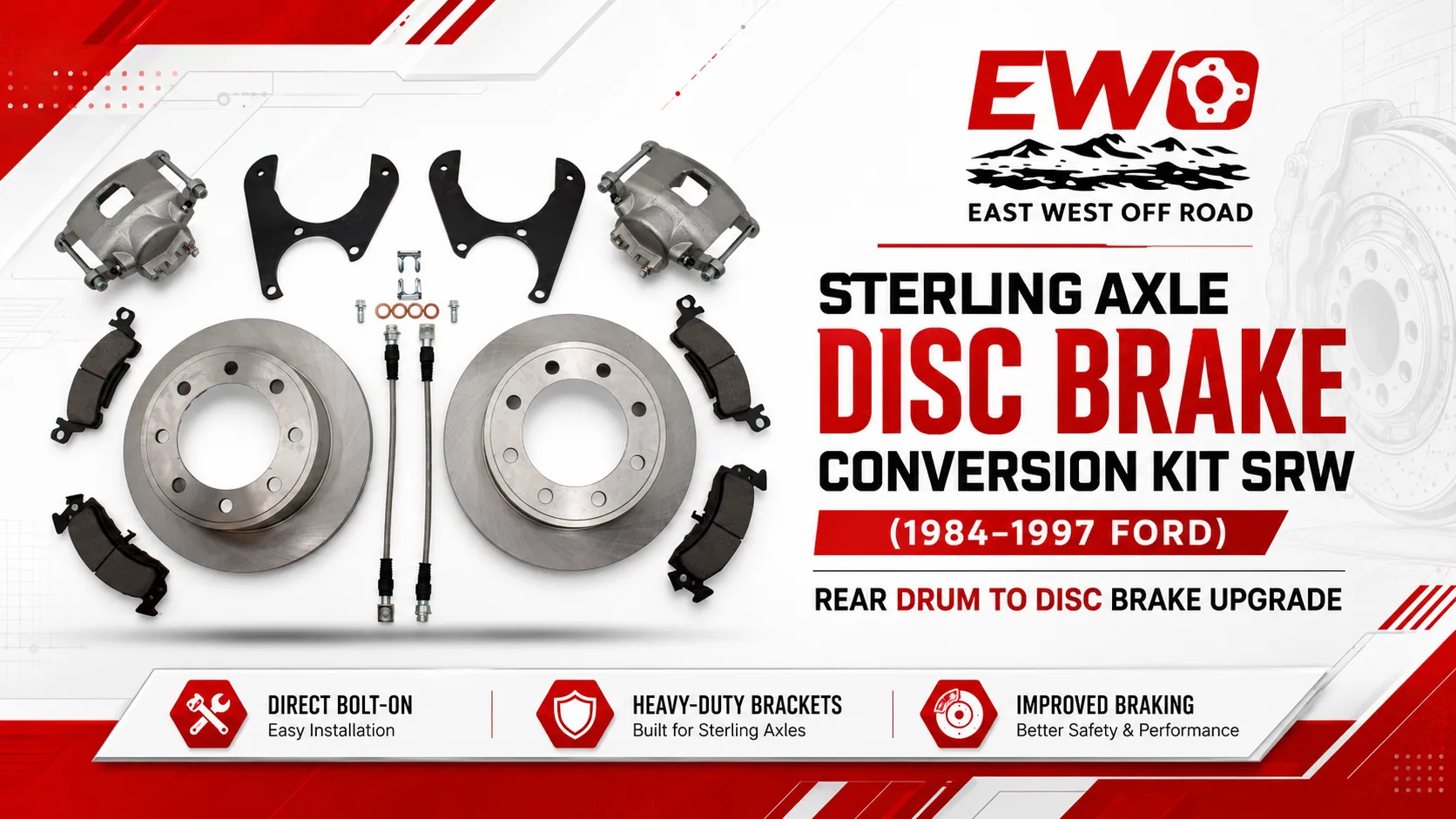
Sterling Axle Disc Brake Conversion Kit – SRW
Complete disc brake conversion for 1984–1997 Ford Sterling SRW rear…
E Rickshaw Spare Parts | Best Manufacturer & Supplier in India
best ev parts of wholeseller of india, ev spare parts wholeseller in delhi, best ev parts provider in delhi, list of electric vehicle parts manufacturers in india, best electric parts company in india, ev spare parts market in delhi
USED Dodge Cars for Sale Toronto, Ontario | Pre Owned Dodge Cars - Total Auto Sales