Re-mark
How AI Chatbots Could Change Online Search: The way we find information online is on the brink of a profound transformation. For decades, search engines have dominated our digital lives, acting as the primary gateway to information. Typing keywords into a search bar, skimming through links, and hopping between pages has been the norm. But the rise of AI chatbots promises to change this fundamentally, creating a more conversational, intuitive, and personalized search experience. From Keywords to Conversations Traditional search engines rely heavily on keywords and algorithms that rank pages based on relevance, popularity, and other metrics. While effective, this method often forces users to frame their queries in precise terms, sometimes leading to vague or unsatisfactory results. AI chatbots, on the other hand, can understand natural language and context. Users no longer need to think like a search engine; they can simply ask, “What’s the best way to grow tomatoes in small urban spaces?” instead of inputting fragmented keywords like “urban tomatoes growth tips.” This conversational approach makes online search feel more human. Chatbots can interpret nuances, clarify ambiguous queries, and even ask follow-up questions to better understand what the user wants. It’s akin to having a knowledgeable assistant available 24/7, ready to provide tailored answers rather than a list of links. Hyper-Personalization of Results AI chatbots don’t just provide answers—they can personalize them. By leveraging user data, search history, and preferences, chatbots can offer recommendations that are more aligned with individual needs. Imagine asking a chatbot for a good book to read, and instead of receiving a generic bestseller list, it suggests titles based on your previous reading habits, favorite genres, and even the mood you’re in. This level of personalization could redefine online discovery, helping users find information and products more efficiently while reducing the time spent sifting through irrelevant search results. Real-Time Interaction and Dynamic Responses Unlike traditional search results, which are static and sometimes outdated, AI chatbots can generate real-time responses. They can pull the latest data, summarize articles, or even create step-by-step guides instantly. For instance, instead of navigating through multiple websites to learn how to troubleshoot a technical issue, a chatbot can provide a concise, actionable solution on the spot. Moreover, AI chatbots can adapt as the conversation unfolds. If an initial answer isn’t quite right, the user can clarify or ask for alternatives, creating an interactive experience that traditional search engines cannot match. Challenges and Considerations Despite their potential, AI chatbots also introduce new challenges for online search. One major concern is accuracy. Chatbots rely on training data, which means they can inadvertently provide outdated, biased, or incorrect information. Ensuring that AI models cite credible sources and distinguish between opinion and fact is crucial. Another challenge is the shift in SEO and digital marketing. As chatbots become more prevalent, content creators and businesses may need to optimize their materials not just for search engines but also for AI understanding. The ranking metrics could shift from backlinks and keywords to quality, context, and clarity of information. Privacy is another consideration. Chatbots often require access to user data for personalization. Striking a balance between delivering tailored experiences and maintaining user privacy will be essential to gaining trust. Redefining the User Experience Ultimately, AI chatbots are poised to redefine the user experience in online search. They promise a more interactive, intuitive, and personalized way to access information, reducing friction and making search feel more like a natural conversation. Users may no longer need to click through multiple web pages or craft precise keyword queries—the chatbot becomes both the search engine and the guide. For businesses, this shift means adapting to new modes of visibility. Traditional SEO strategies may evolve as content needs to cater to AI comprehension and conversational contexts. Early adopters who embrace these changes could gain a competitive edge in a world where the first answer may not come from Google, but from an AI assistant tailored to the user. The Future is Conversational The evolution of AI chatbots signals a future where online search is not just a transactional process but a dynamic, interactive, and human-like experience. While challenges remain, the potential benefits for users—convenience, personalization, and efficiency—are enormous. As technology continues to advance, it’s not far-fetched to imagine a time when “Googling” something is replaced entirely by having a conversation with a chatbot that understands your context, preferences, and intent better than any algorithm ever could. AI chatbots aren’t just a supplement to search engines; they may very well redefine what search means altogether. And for anyone navigating the digital world, the implications are exciting, transformative, and—most importantly—human-centric. Read more about this topic: https://www.chatbotsweb.com/how-ai-chatbots-could-change-online-search/
You may like
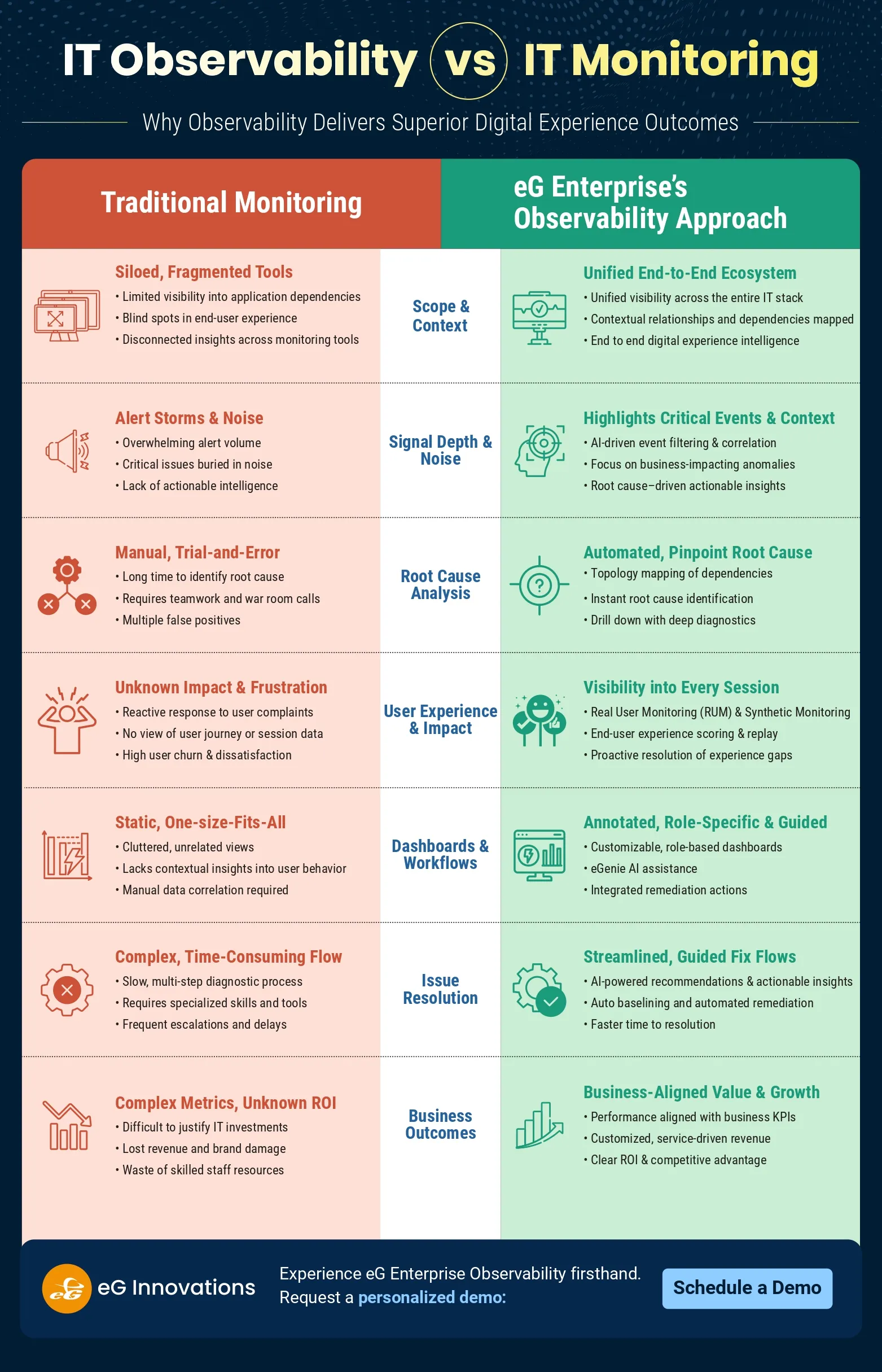
Modern IT requires specialized monitoring for these new technologies, augmented with AIOps technologies for detecting…