 Re-mark
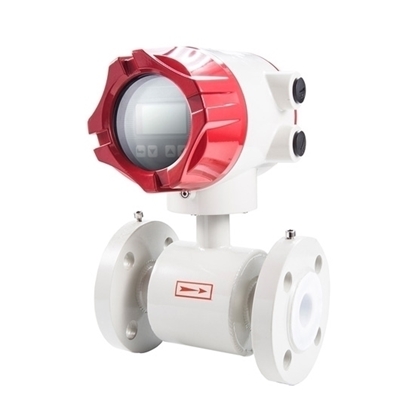
A flow meter is an instrument used to measure the linear or nonlinear mass or volumetric flow rate of liquids, gases, or vapor passing through a pipeline or system. These devices are essential for monitoring and controlling fluid movement across industrial, commercial, and municipal applications, providing critical data for process optimization, resource management, billing accuracy, and regulatory compliance. Flow meters can measure either instantaneous flow rates or total accumulated flow over time, with outputs typically expressed in units such as liters per minute, cubic meters per hour, or kilograms per hour. The technology encompasses numerous operating principles tailored to specific fluid characteristics and application requirements. Electromagnetic flow meters utilize Faraday's Law of Electromagnetic Induction, generating voltage proportional to flow velocity when conductive liquids pass through a magnetic field. These meters contain no moving parts, making them ideal for corrosive slurries and wastewater applications where minimal maintenance is essential. Ultrasonic flow meters employ sound waves to determine flow velocity, with clamp-on designs allowing non-invasive installation without pipe cutting or process interruption. These are particularly valuable for retrofit applications and hazardous environments where physical intrusion is undesirable. Mechanical flow meters such as turbine and paddle wheel designs measure flow through rotating elements that spin proportionally to fluid velocity. Turbine meters offer high accuracy for clean, low-viscosity liquids like fuels and water, while paddle wheel configurations provide cost-effective solutions for chemical processing and water treatment. Positive displacement meters trap discrete volumes of fluid and count chamber fillings, delivering exceptional accuracy for viscous fluids such as oils, syrups, and paints where other technologies struggle. Vortex flow meters detect oscillations created when fluid flows past a bluff body, generating vortices whose frequency correlates with flow rate. These versatile instruments handle steam, gases, and liquids without moving parts, making them suitable for demanding industrial environments. Coriolis mass flow meters represent the pinnacle of accuracy, measuring mass flow directly through vibration changes in curved tubes while simultaneously determining fluid density. Though more expensive, they provide unmatched precision for custody transfer and critical process control in pharmaceutical, food processing, and oil and gas applications. Variable area flow meters, commonly known as rotameters, employ a float that rises within a tapered tube to indicate flow rate visually. These simple, reliable devices require no external power and serve effectively in low-flow applications, laboratory settings, and situations where direct visual indication suffices. Thermal mass flow meters measure heat transfer from a heated sensor to the flowing fluid, excelling in gas flow measurement applications such as compressed air monitoring and emissions tracking. Selecting the appropriate flow meter requires careful evaluation of fluid properties including conductivity, viscosity, temperature, and pressure, alongside operational factors such as required accuracy, installation constraints, and maintenance capabilities. Clean liquids suit turbine or paddle wheel technologies, while conductive or corrosive fluids demand electromagnetic solutions. Non-conductive or hazardous media benefit from ultrasonic or Coriolis approaches. Installation considerations include pipe size, flow profile requirements, and the need for inline versus clamp-on mounting. Modern flow meters increasingly incorporate digital communication capabilities, enabling integration with SCADA systems, cloud-based monitoring platforms, and industrial automation networks. Advanced features include real-time diagnostics, automatic temperature and pressure compensation, data logging, and predictive maintenance alerts. These intelligent instruments contribute to Industry 4.0 initiatives by providing the granular data necessary for optimizing energy consumption, detecting leaks, and ensuring product quality across manufacturing processes.
You may like

trusted healthcare insights