

 Re-mark
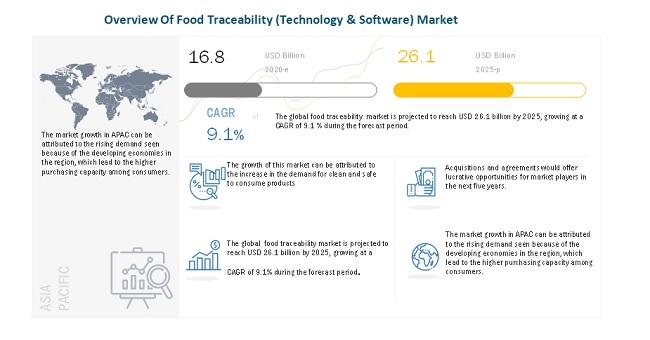
Food Traceability Market Size, Share, Trends and Forecast The food traceability market size was valued at USD 16.8 billion in 2020 and projected to reach USD 26.1 billion by 2025, recording a CAGR of 9.1%. The growing demand for safe to consume products among the consumers is expected to drive the market. The Asia pacific segment is poised to dominate the market due to its high population demanding safe and secure food, it is projected to be the fastest-growing as well, owing to the larger demand of safety concern due to recent COVID outbreak in China. Drivers : Increase in foodborne diseases and food adulteration incidents cause serious health-related issues Foodborne illnesses are generally caused due to the contamination of food with pathogens and mycotoxins. The presence of pathogens, such as Salmonella and Listeria, in food certainly compromises the microbiological safety and quality of food, thereby resulting in foodborne illnesses. According to the CDC, 76 million cases of foodborne illnesses are recorded in the US every year, resulting in 325,000 hospitalizations and 5000 deaths. Although, according to WHO, the WHO region of the Americas has the second-lowest burden due to foodborne diseases. According to the Food Standards Agency (FSA), Campylobacter is the most common form of food poisoning in the UK. An estimated 280,000 people are affected by Campylobacter contamination in chicken annually. In 2014, in the UK, a study by the FSA inferred that most supermarket chickens were contaminated with Campylobacter bacteria. According to WHO, the consumption of unsafe food caused nearly 600 million cases of foodborne diseases each year globally. Due to such instances, food safety has become a major concern attributed to serious health threats. This is projected to drive the demand for food traceability, thereby impacting the market growth positively. Commercial food services have risen dramatically over the last three decades and require extensive food handling. This has led to an increase in the number of people handling food and various other changes such as new methods of producing and distributing food, which has led to a potential increase in the possibility of transmission of foodborne infections from handlers to consumers, thereby driving the demand for food traceability systems.
You may like

Matte Visiting Cards
#MatteVisitingCards, #MatteFinish, #ElegantBusinessCards, #SmoothTouch, #PremiumQuality, #CustomMatteCards, #ModernDesign
Glossy Business Cards
#GlossyBusinessCards, #HighGlossFinish, #ShinyBusinessCards, #LuxuryVisitingCards, #PremiumPrinting, #ProfessionalDesign, #VibrantColors
Eco-Friendly Business Card
#EcoFriendlyBusinessCards, #SustainableDesign, #RecycledPaperCards, #GreenPrinting, #EcoBranding, #BiodegradableCards, #EnvironmentFriendly