

 Re-mark
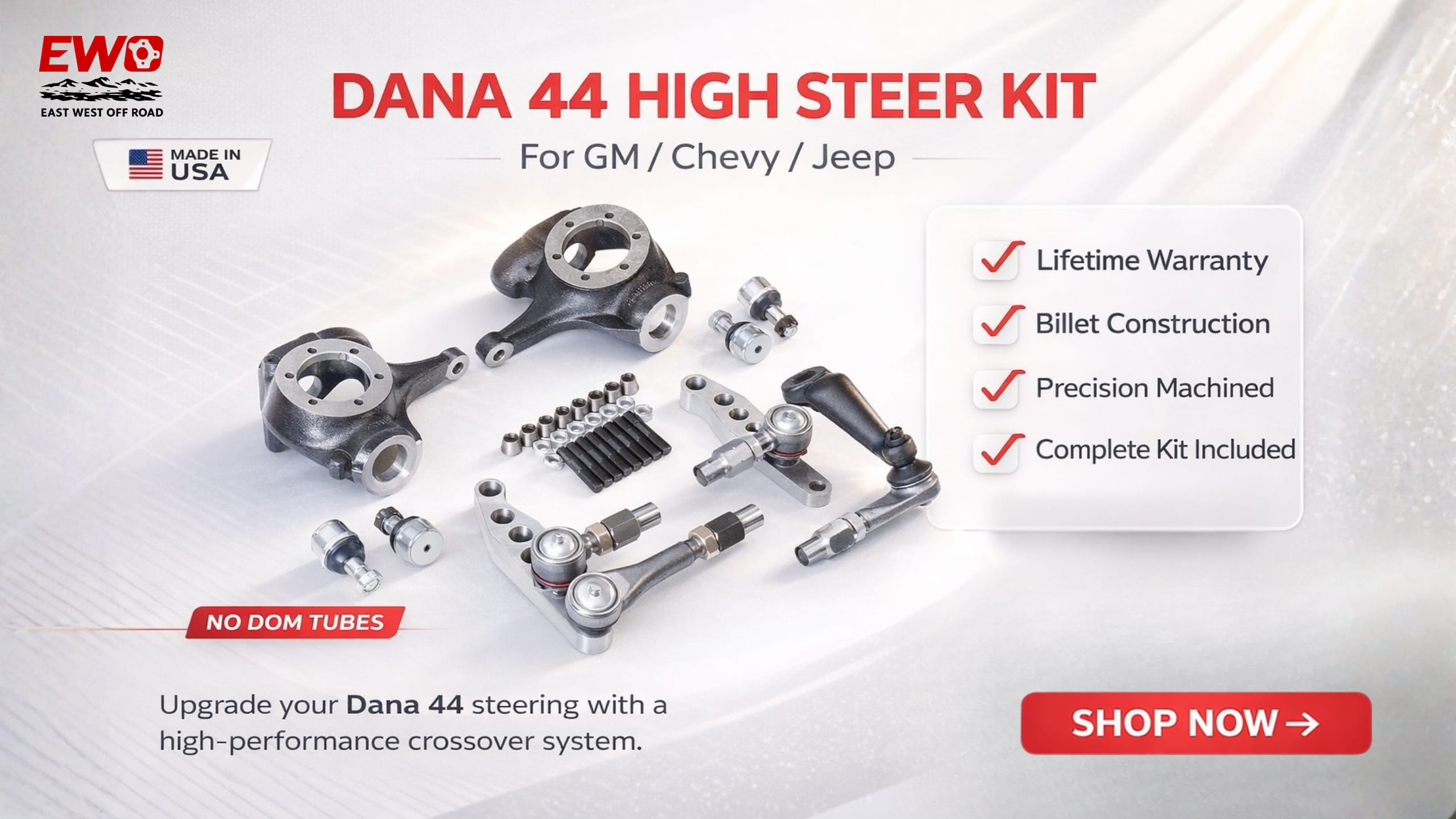
The Missing Piece: Why a 2WD Steering Box Swap is Mandatory for Dana 44 Crossover Steering Upgrading a lifted GM, Chevy, or Jeep with a solid front axle is a rite of passage for serious off-road fabricators. You have done the research, sourced your heavy-duty parts, and decided that an Off Road Crossover Steering System is the only way to permanently cure bump steer and highway wander. But right before you order your parts, you see a crucial requirement buried in the installation notes: Must convert to a 2WD steering box. Why on earth would you put a two-wheel-drive steering box into a hardcore 4x4 trail rig? It is the most common point of confusion for first-time fabricators. Let’s break down the mechanical geometry of your front end and explain exactly why this steering box swap is the mandatory linchpin of any 1-ton Dana 44 high steer conversion. The Geometry of Push-Pull vs. Crossover To understand the solution, you have to understand the problem with the factory setup. The Factory 4WD Sweep Stock 4WD square body Chevys and classic lifted rigs utilize a "push-pull" steering system. The drag link connects the steering box to the driver’s side knuckle. Because of how the linkage is oriented, the sector shaft on a factory 4WD steering box is designed to sweep front-to-back. When you turn the steering wheel, the pitman arm pushes the drag link forward or pulls it backward to steer the tires. The Crossover Requirement When you upgrade to crossover steering, you completely change this geometry. You remove the drag link from the driver's side and route it horizontally across the entire axle, mounting it to a high steer arm on the passenger side knuckle. Because the drag link is now sitting horizontally across the width of the vehicle, it needs to be pushed side-to-side (left to right), not front-to-back. The Fatal Flaw of Reusing the 4WD Box If you attempt to bolt a crossover drag link to your factory 4WD steering box, the system will bind immediately. When you turn the steering wheel, the 4WD box will try to push the drag link forward into your engine crossmember, rather than pushing it sideways toward the passenger wheel. Your steering will be completely locked up. The 2WD Box Solution This is where the 2WD steering box becomes the hero of your custom build. On factory 2WD trucks, the steering linkage is oriented differently, meaning the 2WD steering box is manufactured with a sector shaft that sweeps side-to-side. By bolting a 2WD steering box onto your 4WD frame, the pitman arm will now swing left and right. This perfectly matches the required horizontal motion of your new crossover drag link, creating a flawless, bind-free steering cycle that maximizes your turning radius and eliminates bump steer. Marrying the 2WD Box to the EWO 1-Ton Kit Finding a 2WD steering box is easy, but integrating it into a heavy-duty 1-ton upgrade requires precision hardware. East West Off Road (EWO) engineered their Dana 44 High Steer Kit to make this transition a completely seamless, bolt-on process for professional fabricators and DIYers. The Missing Link: The Drop Pitman Arm To connect your new 2WD box to the drag link safely, you need a specialized pitman arm. The EWO kit includes a heavy-duty, fully indexed 3-inch drop pitman arm featuring 32 splines. This arm slides perfectly onto the 2WD sector shaft, providing the exact drop required to keep your drag link perfectly parallel to the axle. Building the Ultimate Front End Once the 2WD box and pitman arm are mounted, the rest of the EWO kit provides unbreakable 1-ton strength. Designed as an EWO complete high steer kit without DOM tubing, fabricators can supply their own steel to custom-cut their linkages. The kit secures those custom linkages using: Brand-new driver and passenger Dana 44 flat top knuckles Massive 1.25-inch thick billet 1 Ton High Steer Arms Dana 44 Heavy-duty ES2026R/ES2027L drag link ends and ES2234L/ES2234R tie rod ends Fresh Dana 44 upper and lower ball joints Frequently Asked Questions (FAQs) Are 2WD steering boxes weaker than 4WD steering boxes? No. Internally, the gears, bearings, and hydraulic components of a 2WD steering box are identical in strength to a 4WD box of the same generation. The only mechanical difference is the orientation of the sector shaft. Does the 2WD steering box bolt directly into the factory 4WD frame holes? On classic GM and Chevy square body trucks (1973-1987), yes. The 2WD steering box shares the exact same bolt pattern as the 4WD box, making it a direct, bolt-in replacement on the factory frame rail. Can I just buy a twisted pitman arm for my 4WD box instead? While "twisted" pitman arms exist to try and force a 4WD box to work with crossover steering, they are highly discouraged by professional fabricators. They introduce terrible binding angles at the drag link joints and severely limit your suspension articulation. A 2WD box swap is the only structurally sound method.
You may like
Revive Your Favourite Cars with Maven Panel Beater Adelaide
At R&M Paint & Panel, with years of professional vehicle…

Professional automotive photo editing service
We provide top-quality vehicle photo editing services at competitive…
Finding dependable auto insurance can make a significant difference when protecting your vehicle, finances, and peace…