

 Re-mark
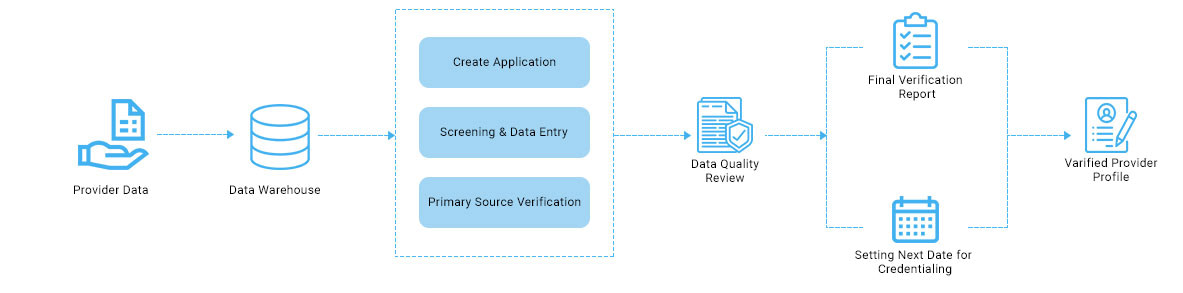
The process of collecting, validating, and assessing a practitioner's qualifications to perform the treatment or provide services for a healthcare organization is known as credentialing. Credentials are proof of licensure, education, training, experience, or other qualities. For instance, a certification, written statement, or experience that qualifies someone to accomplish anything. Practitioners are accredited and granted privileges upon hiring, and this entitlement is renewed every two years. This procedure is authorized only after the hiring organization validates the practitioner's credentials, education, and licensing. Let us focus on the reasons why we consider the Medical Credentialing process to be the backbone of the Healthcare Industry: Centralized Medical Credentialing: Healthcare practitioners, hospitals, and FQHCs (Federally Qualified Health Centers) suffer from tedious, time-consuming, and outdated healthcare credentialing techniques. These procedures are unstructured, error-prone, and far off from intelligent integrations. Such challenges can be resolved by using a centralized, automated medical credentialing process In centralized credentialing, two or more healthcare facilities split the expense of certifying providers, reducing the overall cost and making the procedure more convenient and efficient. Automated Medical Credentialing: As previously stated, the clinician's data verification procedure is time-consuming, and mistakes wreck the entire procedure. Collecting necessary data from physicians, implementing health credentialing in medical billing plans, checking the submitted data for accuracy and reliability, confirming the data and certificates, monitoring provider profiles, and following up with payers are all part of it. Automated Medical Credentialing streamlines the credentialing process by automating several incoming operations, increasing efficiency, and eliminating redundancy. Task management, Document Management, and Reporting : When it comes to sharing vital medical data files via electronic data exchange (EDI), interoperability in healthcare is crucial. This can address interoperability while handling insurance credentialing certification and licenses and maintain a wide range of inbound processes such as document capture, credential tracking, provider data maintenance, secure data management, credentialing, and provider privilege. Implementing Task Management, Document Management, and Reporting replaces administrative paperwork, expensive, time-consuming, and complex processes with a streamlined healthcare credentialing solution. Conclusion: Medical credentialing benefits practitioners since it allows them to extend the number of patients who have access to them once granted authorization to accept customers from insurance companies. Finally, and probably most importantly, patients get the assurance that the medical sector is maintaining stringent standards to guarantee that the health care they get is of the highest quality. Credentialing system may appear to be only an administrative chore, but it is becoming significantly crucial and necessary since it allows people to confidently trust their healthcare practitioners. https://www.osplabs.com/medical-credentialing/
You may like

Cara Daftar DANA Cicil dengan Benar (Paling Baru)

Download Google Fit: Activity Tracking APK (FREE) - APKCream

Download Photomath APK (FREE) - APKCream