

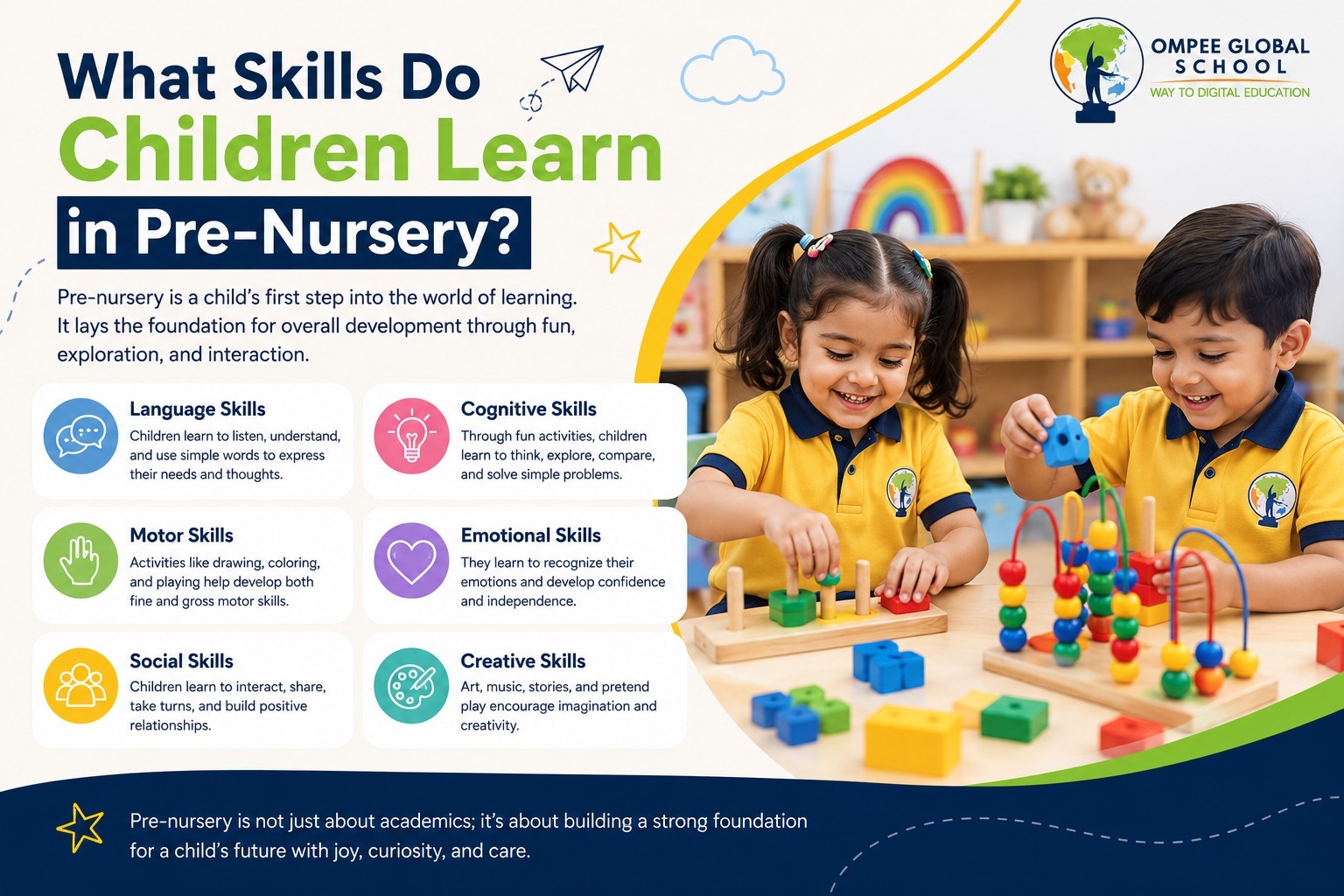
Pre-nursery is often a child's first step into the world outside home. While it may look like just play and colouring, a lot of meaningful learning is happening every single day. During these early years, children begin developing the essential skills that form the foundation for future academic success and overall development. Here's exactly what skills children develop during pre-nursery. 1. Language & Communication Skills Children learn to speak in simple sentences, follow basic instructions, and express their needs. Through stories, rhymes, songs, and conversations with teachers and classmates, they build their vocabulary and communication skills. Why it matters: Early language development plays a vital role in improving reading, writing, and comprehension skills later in school. 2. Social Skills Pre-nursery introduces children to group learning and interaction. They learn to share, take turns, cooperate with others, and recognise basic emotions such as happiness, sadness, and anger. Common activities: Circle time, group games, role play, and collaborative classroom activities. 3. Fine Motor Skills Activities like colouring, finger painting, tearing paper, threading beads, and holding crayons strengthen the small muscles in children's hands and fingers, preparing them for writing. 4. Gross Motor Skills Running, jumping, climbing, balancing, and outdoor play help children develop coordination, balance, strength, and overall physical fitness. 5. Early Cognitive Skills Children begin recognising colours, shapes, numbers, sizes, and patterns. Matching, sorting, puzzles, and simple problem-solving activities encourage logical thinking and early cognitive development. 6. Self-Help & Independence Pre-nursery encourages children to complete simple daily tasks independently, such as washing hands, putting away toys, eating snacks, and organising their belongings. These activities build confidence and responsibility. 7. Emotional Regulation For many children, pre-nursery is their first experience away from home. Teachers help them adjust gradually, express their emotions, develop confidence, and feel comfortable in a new environment. Frequently Asked Questions Q: What age is pre-nursery for? Pre-nursery is generally designed for children between 2 and 3 years of age, before they move on to Nursery (LKG). Q: Is pre-nursery really necessary? Although it is not compulsory, pre-nursery provides children with an excellent developmental head start by strengthening their communication, social, emotional, and learning skills. Q: What do children do all day in pre-nursery? A typical day includes story sessions, rhymes, art & craft, outdoor play, snack time, music, free play, and hands-on learning activities designed around fun and exploration. Q: How is pre-nursery different from nursery? Pre-nursery focuses primarily on play-based learning and social development, while Nursery (LKG) gradually introduces structured literacy, numeracy, and classroom learning. In Summary Pre-nursery lays the foundation for a child's lifelong learning journey. From developing communication and social skills to building confidence, independence, and early cognitive abilities, children between the ages of 2 and 3 learn far more than many people realise. Choosing the right pre-nursery means selecting an environment that nurtures every aspect of your child's development—not just academic learning, but also emotional, social, and physical growth.
You may like

Level 2 Diploma in Decorative Finishing - Painting | M2HSE
construction, health and safety, level 2 construction, level 2 qualification, m2hse training
Dr. Danish Qureshi – Best General Physician in Jagatpura Jaipur | Diabetes, Thyroid, Hypertension & Chest Specialist
General Physician in Jaipur, best general physician in jaipur, general physician near me, top 5 general physician in jaipur, general physician in pratap nagar,
Oracle Fusion Financials Course | Tech Leads IT
Oracle Fusion Financials Training, Fusion Financials Online Training