

 Re-mark
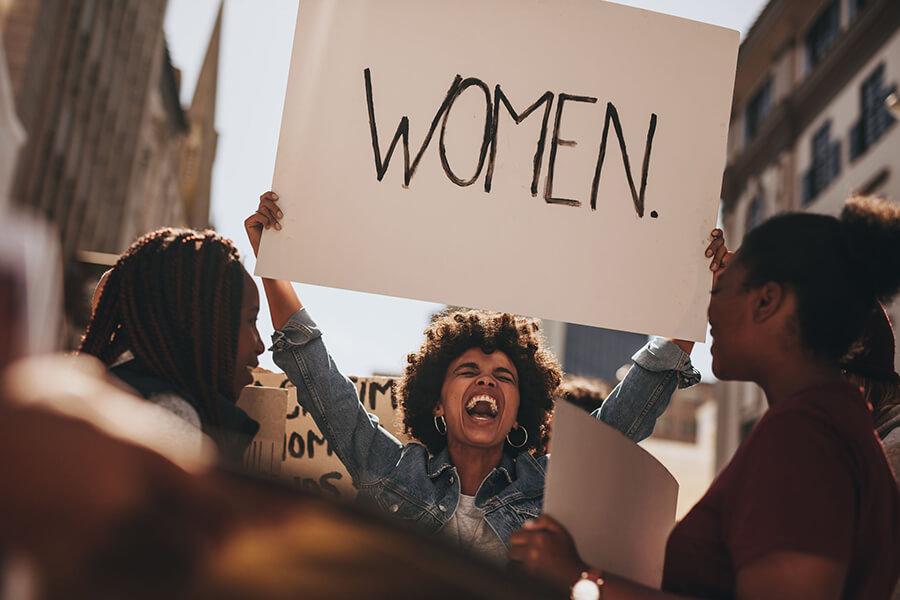
Breaking socio-economic barriers for women’s empowerment Nowadays, gender equity is understood to be a crucial issue for societies and cultures worldwide which are mostly prescribed as “underdeveloped societies”. In these discriminatory contexts , due to the strong impact of patriarchy, women’s condition is characterized by a lack of socio-political representation and the denial of fundamental rights leading to varying forms of violence such as Gender Based Violence/and Gender Based Violence (GBV/SGBV), which have been defined by the international community as drastic and severe crimes against humanity. The United Nations and its agencies have frequently raised alarm bells upon member States with the aim of making them conscious of the unbearable discriminatory conditions of women and girls in many contexts , by stressing that:” Gender equality is a fundamental human rights to achieve peaceful societies, with full human potential and sustainable development”. We are aware that Gender Equality was made part of international human rights law by the Universal Declaration of Human Rights, which was adopted by the UN General Assembly on 10 December 1948. However, this principle has not been upheld in letter and spirit. Which countries have the highest rate of discrimination against women? There has always appeared an acute difference in the treatment of women between the West and the East side of the world. While many Nations have shown a considerable openness to gender equality over the years, there exist certain cultural norms that restrict women from enjoying complete expression of their fundamental rights ( that include political, social and economic ones). On the podium of underrepresentation some nations are worth recalling, namely Afghanistan, Yemen and Iraq, followed by Pakistan, Syria and other Sub-Saharan countries. According to the latest research conducted by the Global Gender Gap Report 2021, three key factors must be taken into consideration to clearly understand how gender equity is still a dogmatic topic in many countries: Inclusion, security and justice. The consequences of gender inequality are clearly dramatic, bringing a negative impact on women’s well-being from both social and economic points of view. Women suffer from isolation and acute stigmatization from their community only for the sake of their gender; this factor leads to a high rate of illiteracy among girls and women along with the high prevalence of school dropout along with tragic future rejection from any job position due to the lack of necessary skills and culture. It is necessary to remind that Women’ rights need to be based on prescriptions by the CEDAW convention ( article 10) which mandates provision of efficient education on part the respective state without any form of discrimination . However, these requirements, (particularly in the Middle-East and Sub-Saharan Africa), the educational and financial gap between men and women is substantial. To know more: https://peaceforasia.org/breaking-socio-economic-barriers-for-womens-empowerment/
You may like

Salt City Billiards is designed to deliver a complete billiards experience. The facility features well-maintained…

Dr. Garg's Family Dental Hospital is one of the best dental hospitals in Nirman Nagar Jaipur,
Best Dentist in Nirman nagar,, Dentist near me, Best Dentist in Shyam nagar, Dental Clinic in Nirman nagar, Dental Hospital in Nirman nagar, Best Orthodontist in Nirman nagar,, Braces Specialist in Nirman nagar,
10 Expert Solutions for Love Problems
10 Expert Solutions for Love Problems , Expert Solutions for Love Problems , Solutions for Love Problems , Love Problems Solution