
 Re-mark
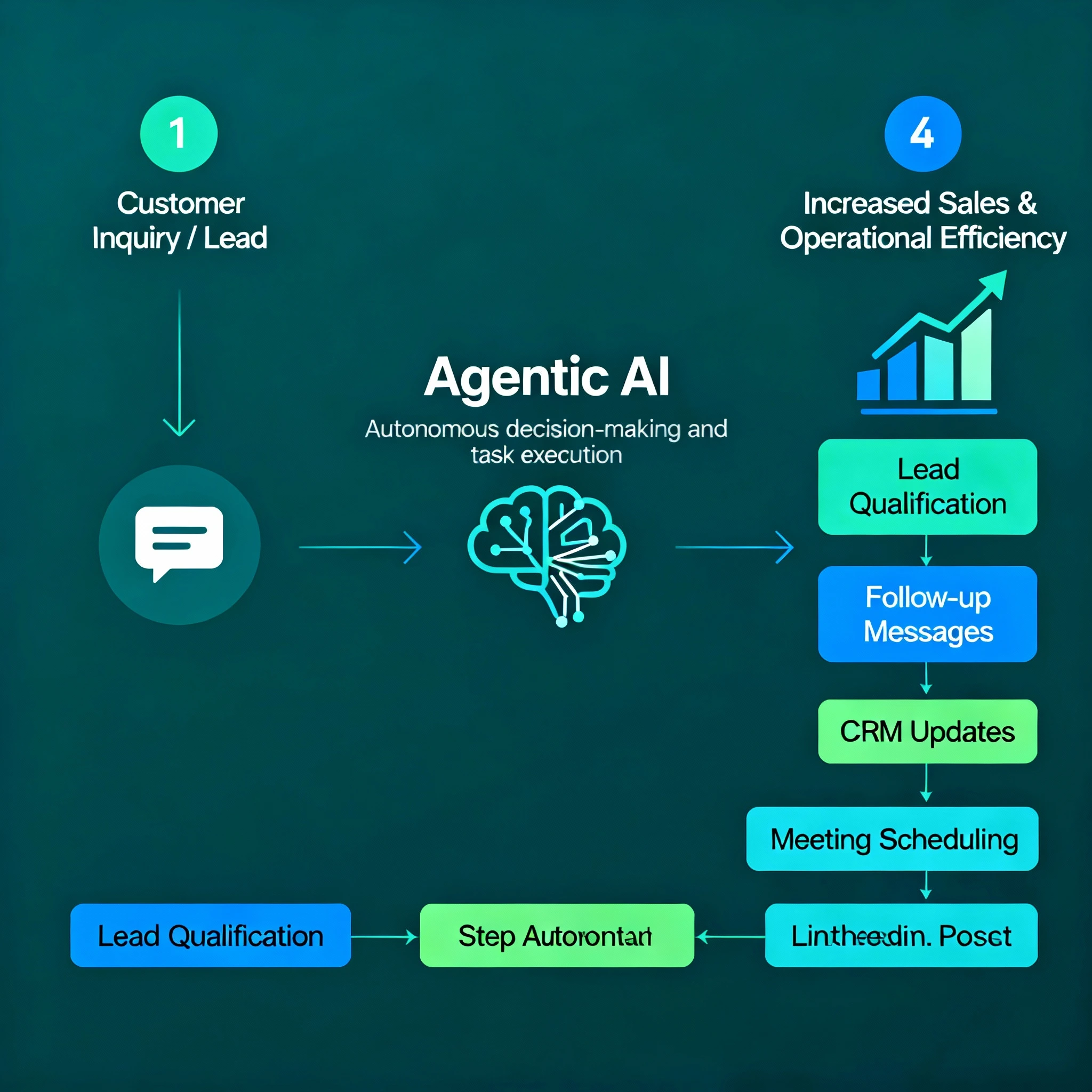
AI continues to build on its rule-based roots, but newer methods push it toward more autonomous and goal-driven behaviour. One of the most significant advances is Agentic AI, which enables systems to act rather than just respond. These agents can plan, execute, and learn, giving organisations a new way to manage complex operations and not just answer queries. As businesses around the world face faster markets, more data, and ever-higher expectations, the potential impact of Agentic AI is becoming tangible across many sectors. What exactly is Agentic AI? Agentic AI refers to systems that go beyond reactive behaviour. Instead of waiting for a prompt and returning a single output, they: Perceive: Collect and process data from sensors, databases or digital interfaces Reason: Use orchestration layers (often large-language-model-based) to plan actions, coordinate specialised models, and set goals Act: Connect to external tools or workflows and execute tasks with built-in checks and limits Learn: Feed back data from their operations into a self-improving loop for better performance over time. Modern agentic systems often combine architectures like Retrieval-Augmented Generation (RAG), Autonomous Decision Trees, and KPI-Monitoring Agents to make reasoning more context-aware and performance-driven. By combining perception, reasoning, action, and learning, Agentic AI operates autonomously toward specific objectives, adapting and executing tasks with limited human oversight. The Role of Agentic AI in Sales The sales process today demands speed, adaptability, and insight. Agentic AI plays a direct role in sales by simplifying workflows, reducing manual steps, and improving win rates. These are some of the major things Agentic AI does: Benefits: Better lead prioritisation through analysis of customer behaviour, interaction history, and external indicators. Increased win rates from timely, AI-driven recommendations for the next best action. Reduced manual workload through automated scheduling, follow-ups, and CRM updates. Continuous performance improvement as the system learns from outcomes and refines strategies. Use cases: An AI agent identifies high-potential leads based on engagement data and triggers personalised outreach. Another agent monitors conversion patterns and adjusts follow-up sequences to shorten deal cycles. Agentic AI in Retail Retail has seen some of the most visible applications of intelligent automation. The current use of AI in this sector revolves around three key areas which are efficiency, experience, and intelligence so as to improve how retailers manage operations, connect with customers, and make decisions. Platforms such as Shopify and WooCommerce now make use of Agentic AI to manage inventory, optimise pricing, and automate customer engagement.
You may like
Additive manufacturing adoption, material innovation, and industrial 3D printing investment are reshaping buying…
B2B Email List, b2b email list providers, 3D Printing Industry Email List
The geospatial industry is growing rapidly but reaching GIS managers, remote sensing specialists, and location…
b2b database, b2b email list providers, Geospatial Industry Email List
Explore our premium leather mouse pad range, handcrafted with smooth, water-resistant vegan material for office…
leather mouse pad